




Tremella fuciformis (Snow Mushroom) | Exploring the Chemicals
Meet Tremella fuciformis
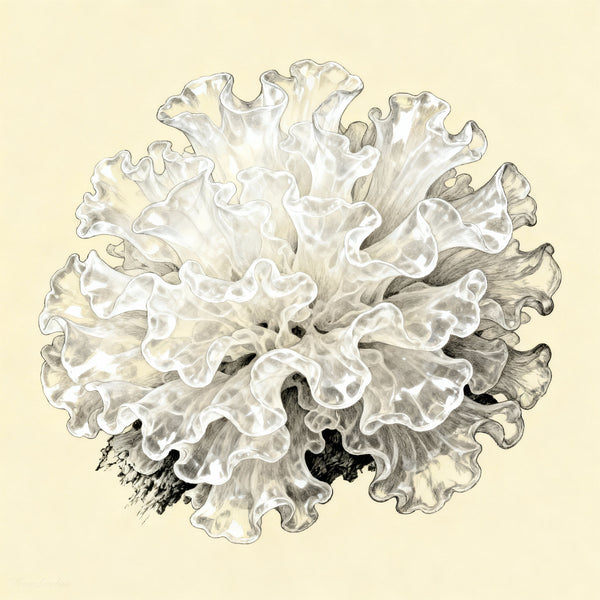
Before it was called a “beauty mushroom”, Tremella fuciformis was food. The translucent, jelly-like fungus floating in traditional Chinese desserts and soups is the same organism that now appears in serums and mists under names like snow mushroom or white jelly mushroom.
For centuries it has been used in East Asian herbal traditions for skin and longevity, long before anyone sequenced its genome or wrote about transepidermal water loss. Modern research has started to catch up: the main bioactive components of Tremella fuciformis are large, water‑loving polysaccharides that interact with skin in very specific ways.
This piece looks at what those polysaccharides actually do, and how far current evidence really goes.
The polysaccharide network
The star chemistry of Tremella fuciformis is its family of high‑molecular‑weight polysaccharides — long, branching sugar chains that form a three‑dimensional network in water. Structurally, they are often described as glucuronoxylomannans: mainly mannose, with side chains of xylose and glucuronic acid.
Functionally, these polysaccharides do two important things for skin:
-
They bind and hold water because of their many hydroxyl and carboxyl groups.
-
They form a soft, flexible film on the skin surface, creating a micro‑mesh that slows water escaping from the epidermis.
In lab work, Tremella polysaccharides show strong water‑binding capacity and a film‑forming effect comparable to other cosmetic biopolymers used for hydration. Unlike small humectants that can diffuse quickly, these large molecules tend to sit at or near the surface, building a hydrated barrier over the stratum corneum (upper skin layer).
On the skin: what Tremella actually does
1. Immediate and short‑term hydration
A controlled human study formulated Tremella fuciformis extract into an alcohol‑based hand gel and tested it on volunteers. Compared with an identical placebo gel, the Tremella version produced significantly higher skin hydration readings at every measured time point, and the effect persisted throughout the 180‑minute observation window. This suggests that Tremella polysaccharides can meaningfully buffer drying environments, not just add a brief cosmetic slip.
2. Supporting barrier function
Barrier function is about both moisture and structure. Preclinical work indicates that Tremella polysaccharides can help reduce water and collagen loss in UV‑exposed skin models, pointing to a protective effect on both the outer barrier and the deeper matrix.
The dermatology review on Tremella fuciformis summarises data where Tremella extracts improved measures linked to barrier protection and wound repair in vitro and in animal models, including enhanced recovery after barrier disruption and support of keratinocyte migration. While human barrier studies are still limited, the mechanistic picture is consistent: film‑forming, water‑locking polysaccharides that also seem to help tissue recover from stress.
3. Oxidative stress, photoprotection, and “anti‑ageing”
Beyond hydration, Tremella polysaccharides show antioxidant activity in multiple systems, scavenging reactive oxygen species and modulating oxidative pathways. In UV‑exposed animal models, Tremella extracts have been reported to reduce signs of photoageing — loss of collagen, increased wrinkle depth, and surface roughness — while improving overall skin appearance.
The clinical review frames this as potential photoprotective and anti‑ageing support, with caveats: most data so far come from in vitro or animal experiments, with only early human work. In a skincare context, it is more accurate to see Tremella as a co‑factor in a broader anti‑oxidant, barrier‑support routine than as a stand‑alone “anti‑ageing cure”.
4. Wound healing and irritation
Several experimental models suggest that Tremella polysaccharides can support wound healing, likely through a mix of antioxidant, anti‑inflammatory, and moisture‑retentive effects. Enhanced keratinocyte migration, improved re‑epithelialisation, and better tissue organisation have been observed in preclinical settings when Tremella is present.
For everyday skin, this translates to a role in calming and supporting recovery after irritation, procedures, or barrier disruption — again, as part of a wider formulation rather than a single‑ingredient therapy.
How Tremella compares to hyaluronic acid
Tremella is often marketed as a “natural hyaluronic acid alternative”. The truth is more nuanced. Both are large, water‑binding polysaccharides, but they differ in structure, origin, and behaviour.
In lab tests, Tremella polysaccharides show strong moisture‑retention and film‑forming properties, sometimes approaching or matching hyaluronic‑acid‑based benchmarks in model systems. However, there is not yet a robust body of head‑to‑head clinical trials in human facial skin proving that Tremella is categorically “better than” hyaluronic acid across endpoints.
A more honest position is that Tremella offers hyaluronic‑acid‑like benefits (water binding, surface film, comfort) with some distinct extras (antioxidant and possible barrier and wound‑healing support), making it a credible companion or alternative, not a simple replacement.
Where Tremella belongs in a routine
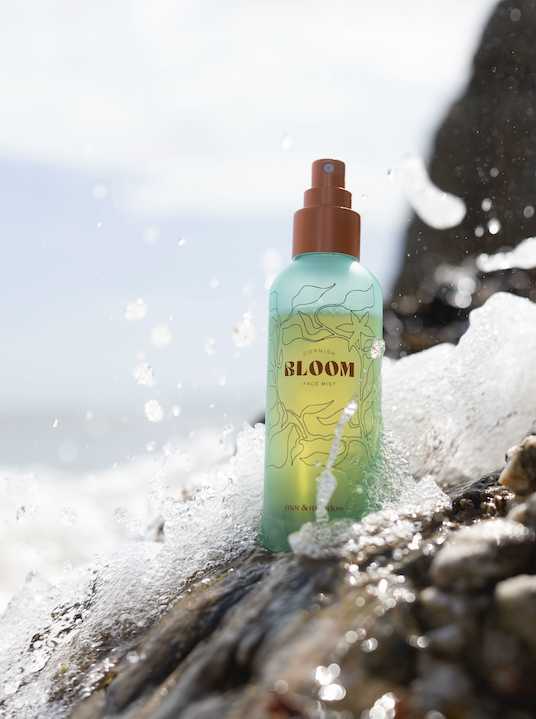
Given the data so far, Tremella makes the most sense in leave‑on, water‑based products: mists, essences, serums, and light gels that are designed for comfort, hydration, and barrier support.

Tremella fuciformis is not just a trendy mushroom but a biologically interesting source of water‑loving polysaccharides with emerging — but still growing — clinical support. Used thoughtfully, it helps shift skin away from dryness and fragility towards something quieter and more resilient.