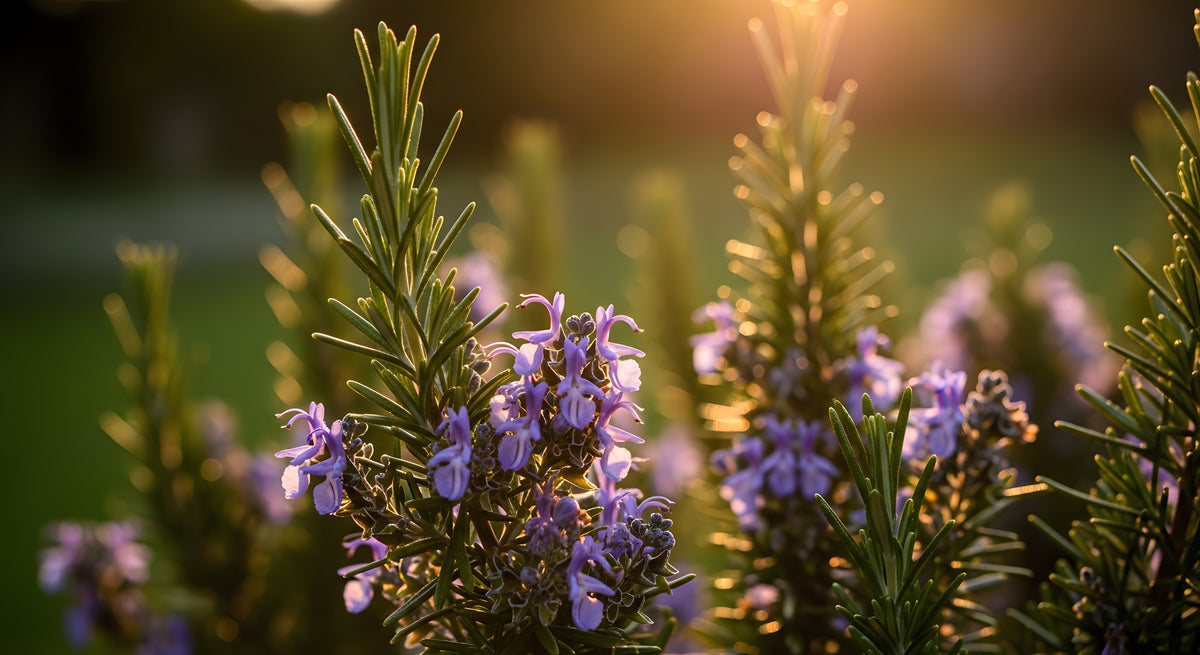
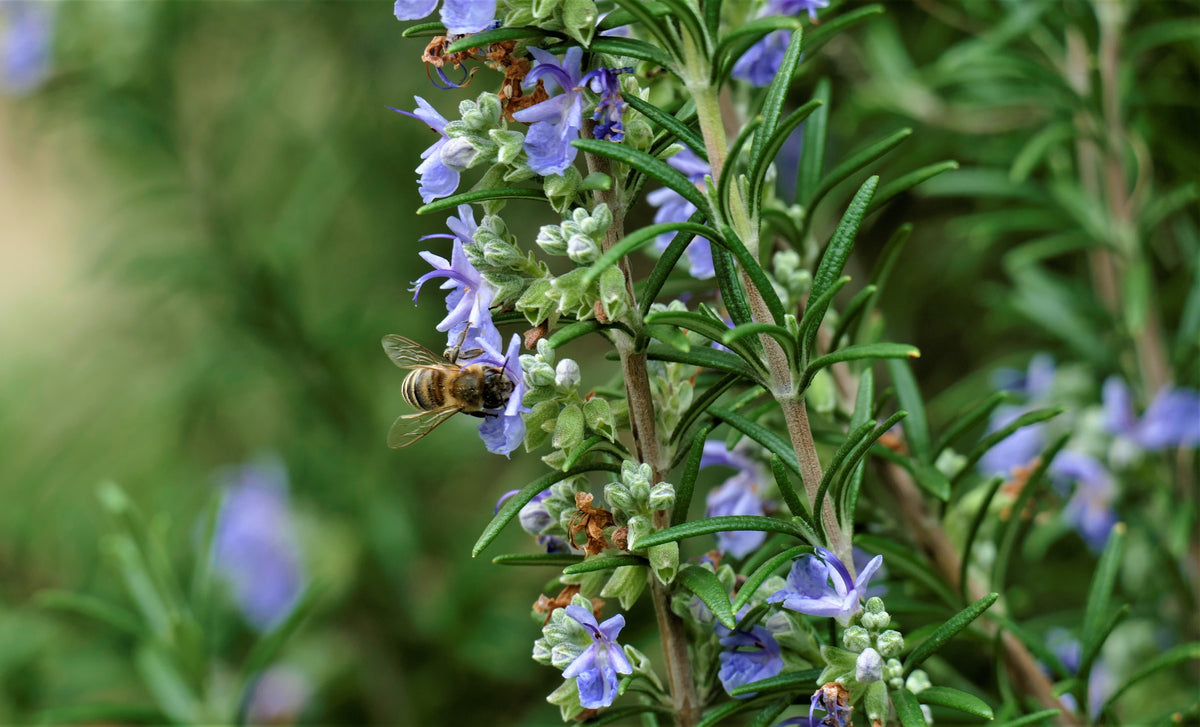
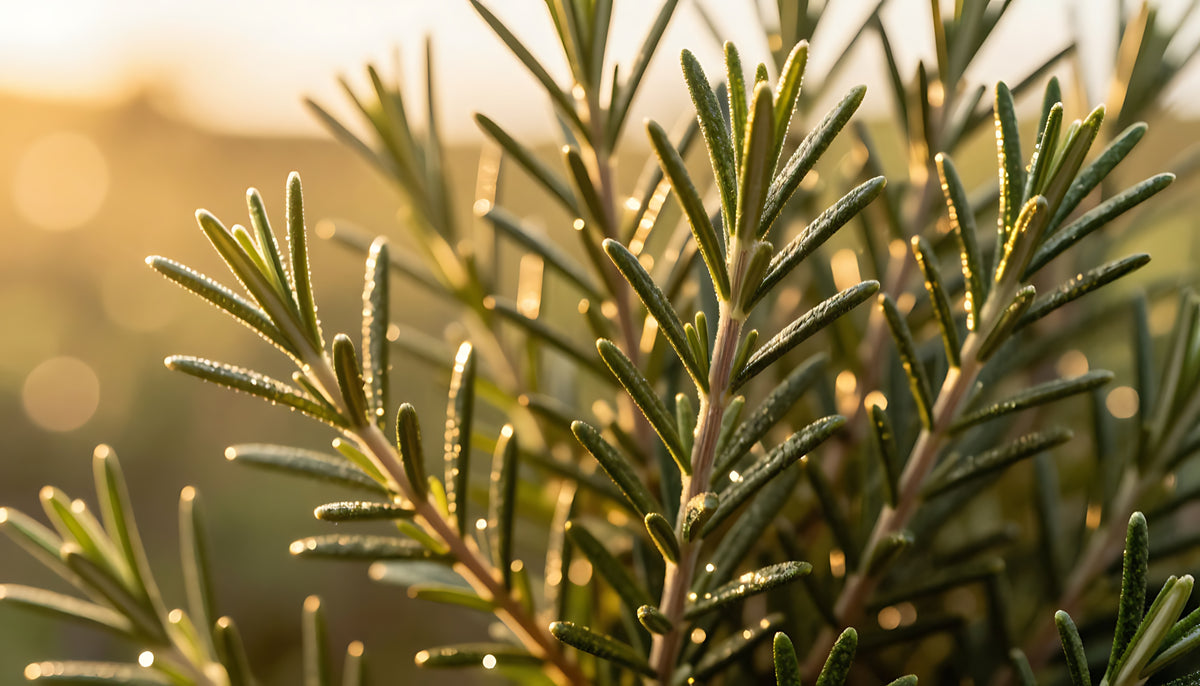
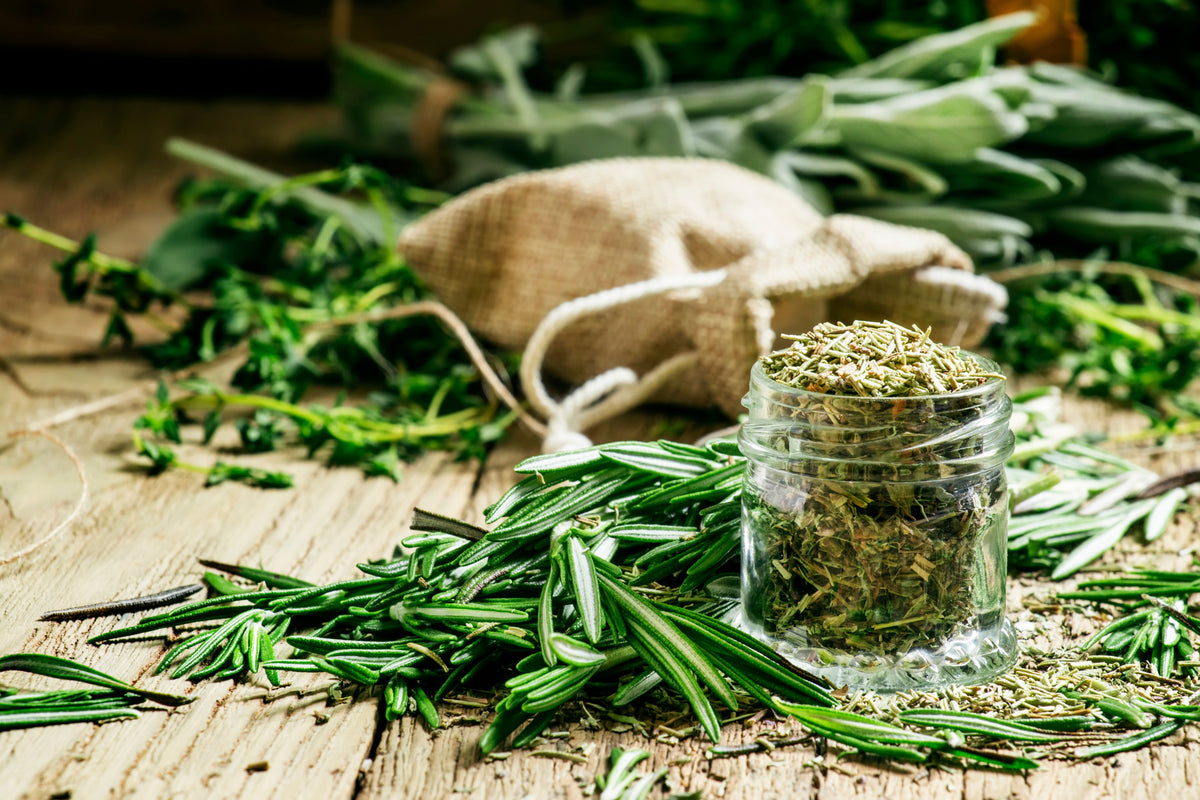
Rosemary is a fragrant evergreen Mediterranean shrub recognised for its woody stems, narrow aromatic leaves, and delicate flowers. Widely appreciated as a garden, culinary, and medicinal plant, it also has a place in fragrance and skincare. Here it is valued for its fresh scent and antioxidant and anti-inflammatory profile.
“Rosemary brings together aromatic freshness, botanical resilience, and a long-standing association with clarity and care.”
Benefits
Antioxidant Powerhouse
Rosemary is a highly active skincare botanical with antioxidant, anti-inflammatory, and barrier support. Its key beneficial compounds include carnosic acid and carnosol, which are major drivers of its antioxidant activity, as well as rosmarinic acid, camphor, and alpha-pinene. These compounds are linked to protection against oxidative stress, support for collagen, and a calmer skin environment, giving rosemary a strong place in skincare focused on resilience and balance.
History
Ritual & Memory
Rosemary’s history begins in the Mediterranean, where it became woven into ancient ritual, medicine, and daily life. The plant appeared in Egyptian burial practice, was linked by the Greeks and Romans with memory and purification, and remained important in medieval Europe as both a cultivated herb and a symbol of remembrance
Cultivation
Sun Lover
Rosemary is a sun-loving Mediterranean shrub that grows best in a warm, sheltered position with full sun and light, free-draining soil. It is naturally drought tolerant once established and generally needs little maintenance beyond occasional watering while young and annual trimming to keep growth compact and bushy. Good drainage is essential, especially in winter, as rosemary dislikes wet roots and can suffer in cold, waterlogged conditions. In heavier soils, it is often better grown in raised beds or containers, where drainage and winter protection are easier to manage.
Harvest & Extraction
Height of Bloom
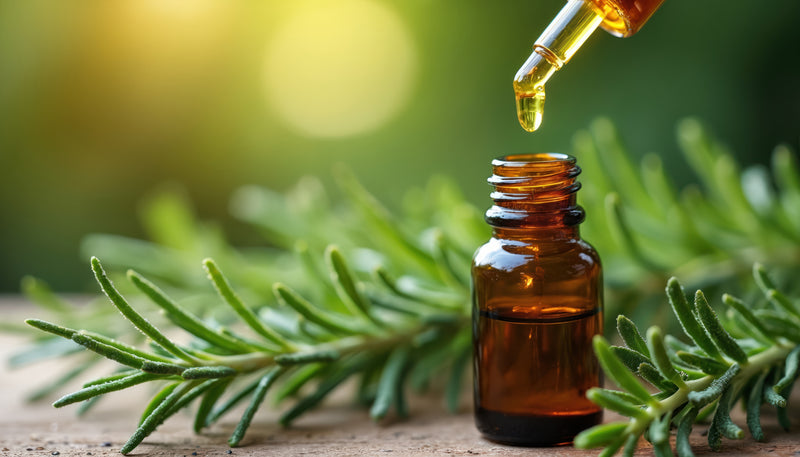
Harvesting is usually timed to coincide with rosemary’s most aromatic stage, when the leaves and flowering tops are rich in volatile compounds. These parts are then steam distilled to draw out the plant’s essential oil, producing a concentrated extract with rosemary’s distinctive fresh, herbal, and camphoraceous character.